


playgeni Reimagines the AI Toy Category: Screen-Free Storytelling Built on Physical Play and Layered Safety
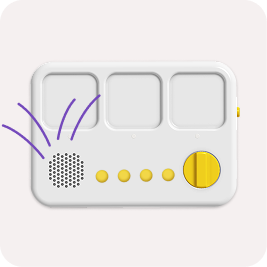
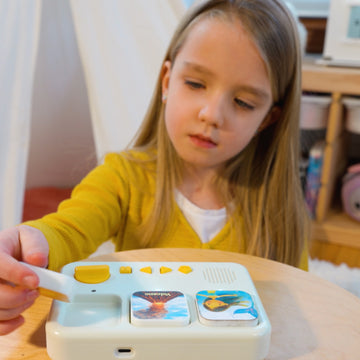
playgeni is an AI-powered storytelling toy that lets children construct original audio stories using physical blocks. Designed for kids ages 3–8, playgeni is a screen-free, mic-free device that turns a child's curiosity into personalized narratives, all without passive consumption.
From MIT Research to the Living Room
playgeni originated from MIT Design Intelligence Lab, which specializes in physical AI and explores how physical interfaces can make AI tangible and constructive for young learners. The work draws a direct line from Friedrich Froebel's 19th-century kindergarten "gifts": the simple wooden blocks, spheres, and sticks that shaped the creative thinking of Frank Lloyd Wright, Buckminster Fuller, and others. It poses a new question: if physical objects helped children grasp the principles of architecture and design, what materials could help them explore the building principles of generative AI?
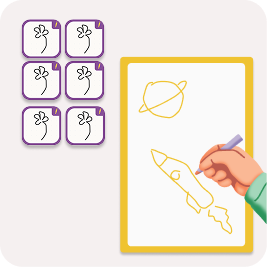
The answer was not a screen or a chatbot, but physical blocks that children customize, arrange, and remix, with each combination sparking new storylines.
Safety as a Design Principle
Unlike many AI products entering the children's space, playgeni was built around safety from the hardware level up. The team worked closely with over 100 families throughout development to shape the product. playgeni has no microphone and no camera. Children cannot enter free-text or voice prompts, eliminating the largest vector for unintended or adversarial inputs. There is no ambient audio collection, no voice likeness captured, and no background conversation recorded. Every input a child can provide is a pre-screened, pre-curated physical block that has been created by a human before it reaches the system.
On the software side, every generated story passes through multiple layers of content moderation: human-written story prompts form the foundation of each generation; an exact-match filter for profanity and slurs across multiple languages scans every generated sentence; a content moderation API flags categorical harms including inappropriate language, violence, and hate speech; and text-to-speech output is independently checked before reaching a child's ears. Where a child's name is used to personalize a story, the name is swapped on playgeni's end so the AI model never receives personal information about the child. playgeni also runs on Anthropic's Claude, which Common Sense Media – the leading independent assessor of AI products for children – has rated as the lowest risk chatbot available. playgeni was also designed to avoid the companion dynamics that have raised concern in other AI products for children. Each interaction is discrete — a child places blocks, a story is generated, and the exchange ends. playgeni has no memory of previous sessions, expresses no emotions, and has no mechanism to learn a child's patterns over time. The experience is closer to a book than a conversation.
Keeping Parents in the Loop
Through the playgeni parental app, parents can personalize their child's experience by setting age-appropriate story length and tone, choosing learning goals, and reviewing their child's story history at any time. Content is pre-curated by playgeni and can be further configured by parents, giving families full visibility into what their children hear.
The Team
playgeni was founded by Kevin Tang (CEO), Shannon Li, and MIT professor Marcelo Coelho: a team from MIT and Harvard specializing in AI, hardware systems, and education. The team is supported by MIT’s DesignX as well as advisors with deep experience at Mattel, Hasbro, Disney, and in hardware commercialization.